

What is Used Fuel?
Used nuclear fuel is made up of small, gummy bear-sized uranium pellets that have already spent years generating electricity.
Nuclear fuel typically spends about five years inside a reactor producing reliable, carbon-free electricity. After years of operation, the fuel can no longer efficiently power the reactor and is removed. At that point, it is considered used fuel.
Used fuel is solid when it enters a reactor and remains solid when it is removed. It consists of ceramic uranium pellets sealed inside metal tubes that are grouped together into fuel assemblies. The by products created during reactor operations remain contained within these.
Even after generating massive amounts of carbon-free electricity, the amount of used fuel produced is remarkably small:
- All the used nuclear fuel produced over an entire person's lifetime of nuclear-powered electricity could fit inside a soda can.
- All the used nuclear fuel produced by the U.S. nuclear industry in over 50 years of operation would, if stacked end to end, cover a football field about 12 yards high.
How Used Fuel Is Stored
Once removed from the reactor, used nuclear fuel is managed through a three-step storage process:
Step1 : Cooling in Storage Pools
After leaving the reactor, used fuel is transferred to a specially designed storage pool at the plant site. The water cools the fuel and provides radiation shielding while heat from radioactive decay continues to decrease.
Step 2: Transfer to Dry Cask Storage
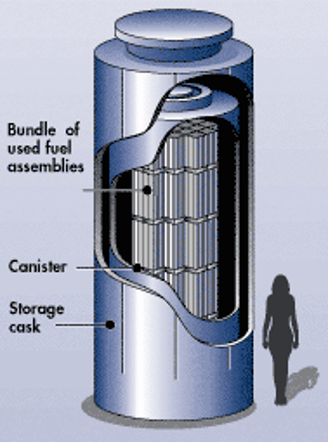
After several years in the pool, the fuel can be transferred to dry cask storage systems. There, it is sealed inside steel canisters protected by reinforced concrete storage systems designed to safely contain and protect the fuel.
Step 3: Ongoing monitoring
Once placed in dry cask storage systems, used fuel remains securely stored at nuclear plant sites under continuous monitoring and strict federal oversight.
Learn more about nuclear safety here.
[1] https://www.nei.org/fundamentals/used-fuel
[2] https://www.nei.org/advocacy/make-regulations-smarter/used-nuclear-fuel
Image Credits: Nuclear Energy Institute